
Fire & Smoke Damage Guide – Southwestern Ontario
This guide is for homeowners in Chatham-Kent and nearby communities who have experienced a fire or a significant smoke event. It explains what typically happens next and what you can expect from a restoration perspective. It is not a step-by-step cleaning manual.
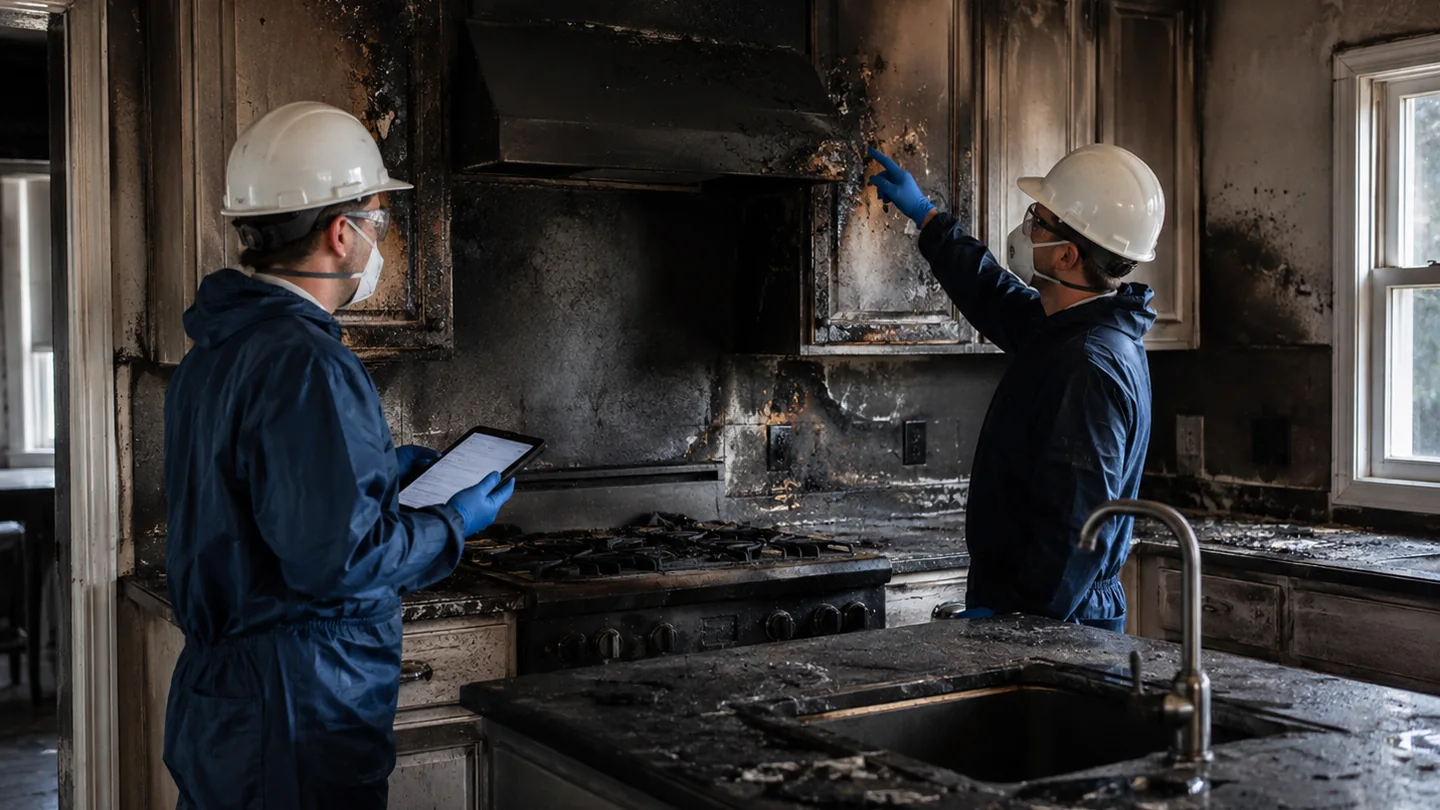
Even a small kitchen or electrical fire can affect an entire home. The flames may be limited, but smoke, odour and fine particles travel quickly through hallways, stairwells and ductwork.
1. Safety & Re-Entry After a Fire
The fire department is the first authority on when it is safe to re-enter the property. Their clearance is the starting point, not a guarantee that everything indoors is healthy or structurally sound.
- Follow all instructions from the fire department regarding re-entry and utilities.
- Be cautious around damaged structural elements, stairs, ceilings and flooring.
- Remember that lingering smoke and residue can irritate lungs, eyes and skin.
- Children, older adults and people with respiratory conditions should avoid heavily affected areas until conditions are assessed.
Once you are allowed back in, the first priorities are documentation, protecting what you can, and stabilizing the property.
2. How Smoke Moves Through a House
Smoke rarely stays in the room where the fire started. Warm smoke seeks upper levels and hidden pathways, and can affect rooms that never saw open flames.
- Smoke can travel through stairwells, ceiling cavities and wall spaces.
- Forced-air heating and cooling systems can carry odour and fine soot throughout the home.
- Closed doors and cabinets reduce exposure but rarely block it completely.
- Soft contents (furniture, clothing, bedding) can hold odour even when they look clean.
Understanding how smoke travels makes it easier to see why professional cleaning often extends beyond the immediate fire room.
3. Different Types of Smoke Residue
Not all smoke is the same. The material that burned, and the way it burned, affects how difficult the cleanup will be.
- Dry smoke: produced by hotter, faster-burning fires.
- Wet or greasy smoke: from lower-temperature, smouldering fires (such as kitchen fires).
- Protein smoke: from food and cooking oils.
- Fuel or furnace smoke: can be especially persistent and may affect mechanical systems.
These characteristics influence which cleaning methods are effective and which surfaces may require more extensive work or replacement.
4. Things That Often Make Fire & Smoke Damage Worse
In the stress of a fire, it is natural to want to start cleaning immediately. Some actions can set stains or spread residues further.
- Washing soot-covered walls without a plan: can drive residue into surfaces.
- Using household vacuums on fine soot: can redistribute particles.
- Throwing away everything too quickly: insurers often want documentation first.
- Running the HVAC system immediately: can move soot into clean areas.
A calm assessment and a structured plan usually produce better results than urgent, unplanned cleaning.
5. What Fire & Smoke Restoration Normally Focuses On
While each project is unique, restoration work after a fire often involves several recurring elements.
- Stabilizing the structure: boarding up openings, securing doors and limiting additional weather damage.
- Removing debris: clearing burned and unsalvageable materials.
- Detailed cleaning: appropriate methods on walls, ceilings, cabinetry and surfaces.
- Odour control: combining source removal, cleaning and air filtration.
- Air quality considerations: HEPA filtration and ventilation strategies where practical.
The goal is not just to make surfaces look better, but to deal with odour and fine particles in a thoughtful way.
6. Fire, Smoke & Your Insurance Claim
Many Ontario home policies include coverage for fire and smoke damage, but the details differ. Our role is to provide accurate information about the condition of the building and contents.
- Documenting visible damage with photos and notes.
- Separating destroyed items from those that may be salvageable.
- Providing scope descriptions of reasonable cleaning and restoration steps.
- Sharing readings and observations that support your discussions with the adjuster.
For a broader look at how claims often work in Ontario, you can also review our Insurance Claims Guide.
7. When to Reach Out
If you have had a fire, cooking incident or persistent smoke issue in Chatham-Kent or a nearby community and want to understand what a realistic restoration plan might look like, we are available to discuss options.
Phone: 226-799-1920
Email: info@thamesvalleyrestoration.ca