
Case Study 1 – Mold Behind Basement Drywall
This case study describes a typical scenario where mold was discovered behind finished basement drywall in a home near the Thames River in Chatham-Kent. Details are generalized to protect privacy, but the sequence follows patterns we see often in this region.
1. Background
The homeowners had purchased the property a few years earlier. The basement had been finished by a previous owner with stud walls, insulation and drywall over the original concrete foundation.
- Minor seepage had reportedly occurred during heavy storms but always seemed to “dry up on its own.”
- A dehumidifier was used from time to time, but not consistently during humid months.
- No obvious mold was visible on the painted interior surfaces of the basement walls.
2. First Signs of a Problem
Over several months, the family began to notice a musty odour near one corner of the basement, most noticeable after periods of rain or during humid weather.
- Paint near the baseboard showed slight discolouration that was easy to miss at first glance.
- Furniture placed against the outer wall sometimes felt cool and slightly damp on the back.
- The odour returned even after basic surface cleaning and airing out the space.
Because the concern did not go away, they asked for an inspection to understand what was happening behind the wall.
3. Investigation & Discovery
We started with a visual inspection and basic moisture readings along the suspect wall.
- Moisture readings near the floor were elevated compared to other basement walls.
- No active leaks were visible at the time of inspection.
- A small test opening was made in the drywall in a discreet location close to the floor.
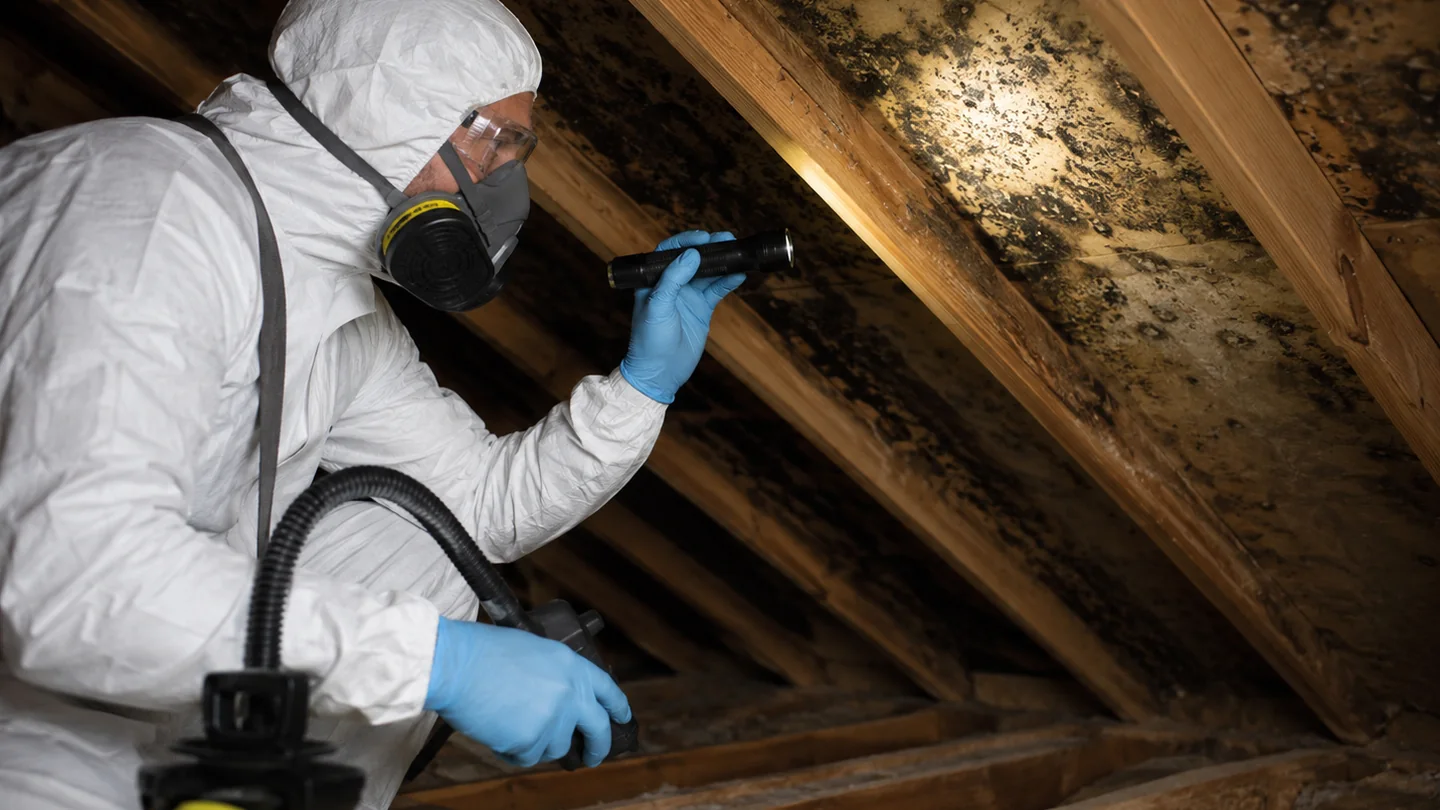
Inside the wall, mold growth was present on the backside of the drywall and on paper-faced insulation. The concrete foundation behind showed signs of repeated dampness, likely tied to exterior grading and heavy rain.
4. Remediation Plan
The goal was to remove affected materials in a controlled way, limit the spread of dust and spores, and address moisture behaviour as much as reasonably possible.
- Set up containment around the work area and used HEPA air filtration.
- Carefully removed affected drywall, insulation and baseboard along the damp section of wall.
- HEPA-vacuumed and cleaned remaining framing and concrete surfaces.
- Allowed the area to dry using dehumidification before discussing rebuild options.
Throughout the work, we showed the homeowners what we were finding so they understood what had actually been removed and why.
5. Outcome & Prevention Steps
After remediation, follow-up moisture readings remained within normal ranges and the musty odour disappeared.
- The owners chose a rebuilding approach that allowed a small air gap and better air movement along the outer wall.
- Downspouts were extended further from the foundation to reduce surface water near the house.
- A dehumidifier was put on a more consistent schedule during humid weather.
The key lesson was that long-term, low-level moisture can cause hidden problems even when surfaces look acceptable for years. Early investigation when odours begin often leads to better, smaller repairs.